



The commercial building is becoming the technology platform
For decades, commercial property owners have largely viewed technology as a cost of operating a building, while much of the technology and connectivity within a property has been regarded as something for the tenant to arrange and manage. But that model is changing. Building technology and the data it generates are increasingly becoming valuable assets in their own right, capable of improving operational performance, enhancing the tenant experience and, ultimately, increasing the value of the property.
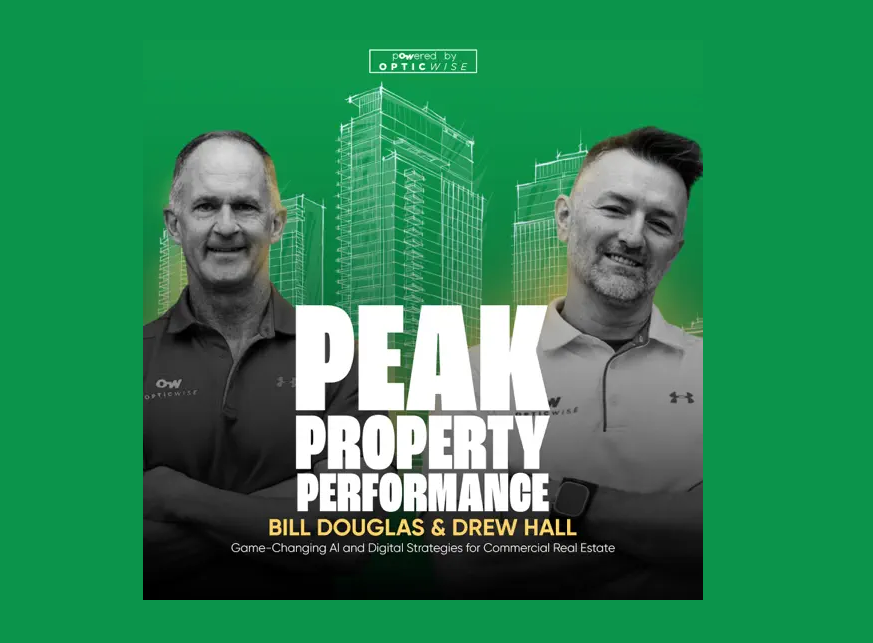
This was one of the central themes of a recent episode of the Peak Property Performance podcast, How Owners Use Technology and Operational Intelligence to Drive Asset Performance which examined how commercial property owners can use technology and operational intelligence to drive asset performance. The discussion focused on Esperia, a huge former Sprint corporate campus in Overland Park, Kansas. The site covers approximately four million square feet across 200 acres and includes 17 office buildings, 14 parking garages, its own power plant, extensive fibre infrastructure and a wide range of amenities.
What makes the example particularly interesting is that the technology was not simply being used to make the buildings more convenient. It was being treated as part of the underlying property asset.
The owners discovered that the campus already contained an enormous amount of fibre and technology infrastructure. Rather than expecting every tenant to install and manage its own connectivity, they took control of that infrastructure and effectively turned connectivity into a service provided by the building. The proposition therefore changes from, “Here is your office space; now arrange your own technology,” to, “Here is a fully connected, secure and technologically enabled building.”
That distinction matters. Technology can become a leasing advantage, a tenant-retention tool and potentially a source of additional revenue, rather than simply another operating expense.
The same principle applies to building data. At Esperia, the building-management systems monitor approximately 51,000 data points. That level of visibility can provide early warnings when equipment begins to deteriorate or when systems are not operating as they should. Instead of waiting for a failure to occur, creating an emergency, disrupting a tenant and generating an expensive repair, the owner can use data to identify problems earlier and undertake preventative maintenance.
This represents a fundamental change in the way buildings can be managed. Data turns the building from a largely reactive environment into one that can increasingly be monitored, understood and managed proactively.
Perhaps even more important is the question of who controls that data?
There is an important distinction between personal information generated by people using a building and operational data generated by the building itself. Information about HVAC performance, energy consumption, equipment, building automation, infrastructure, occupancy, utilisation and connectivity is fundamentally different from personal information about individual occupants.
The argument is that property owners should have access to the operational data generated by systems that they own and operate. If that information becomes locked inside multiple technology platforms or vendor systems, the owner can lose visibility of its own asset. With control of the data, however, the owner gains a much clearer understanding of how the property is actually performing.
Occupancy provides a good example. Instead of relying on assumptions or occasional physical counts, technology can provide a much clearer picture of how buildings and spaces are being used. Owners can begin to understand which buildings are occupied, when they are being used and how much space tenants are actually utilising.
That information is valuable well beyond day-to-day property management. It can inform decisions made by asset managers, investors and lenders and can influence capital expenditure, leasing strategies and ultimately perceptions of the property’s value.
Perhaps the most compelling aspect of this approach is that technology can allow older buildings to behave more like modern intelligent assets. Esperia was developed almost three decades ago, so this is not simply a case of designing a smart building from scratch. The challenge is how to modernise an existing property without disrupting the businesses that occupy it.
Operational intelligence can help owners understand when roofs, plumbing, mechanical systems and other infrastructure need attention, allowing capital investment to be prioritised according to actual condition and performance rather than simply following a predetermined replacement schedule.
This also changes the economics of Proptech. The conversation moves beyond the idea that technology merely saves money. Technology can potentially generate revenue and contribute directly to asset value.
Connectivity controlled by the building owner, for example, can become a service that tenants pay for. At that point, technology is no longer simply CapEx or OpEx. It becomes an asset, a service, a potential revenue stream and a competitive advantage when attracting and retaining tenants.
Looking ahead, flexibility will become increasingly important. Tenants are changing the amount and configuration of space they occupy, meaning that technology needs to be capable of moving and adapting with them rather than being permanently tied to a particular office configuration. Security will also become increasingly important, with tenants wanting confidence that the buildings they occupy are secure while owners must ensure that operational intelligence does not become an excuse for unnecessarily collecting personal information.
The broader message is clear. The traditional model was simple: the building provided the space and the tenant brought the technology. The emerging model is very different. The building itself is becoming a technology platform, combining digital infrastructure, sensors, connected systems and operational data to create an intelligent asset.
For property owners, the opportunity is therefore much bigger than simply installing more technology. The real opportunity is to understand, control and use the information generated by the building to improve efficiency, maintenance, tenant experience, leasing, security, capital planning and asset value.
The buildings that succeed in the future may not simply be the ones with the most technology. They may be the ones where the technology, infrastructure and data are properly integrated into the ownership and management of the asset itself. Commercial property owners should stop treating technology and building data as an expense or something belonging to the tenant, and instead treat it as an asset that the owner controls and can use to improve the value and performance of the property.
The traditional model always was, Building → tenant → tenant brings technology.
The emerging model is, Building + digital infrastructure + sensors + systems + operational data → intelligent asset.
And once the owner controls that infrastructure and data, it can improve: operating efficiency, preventative maintenance, tenant experience, tenant retention, leasing, security, capital planning, financing, asset valuation and potential revenue.
Click this LINK to access the full OpticWise podcast How Owners Use Technology and Operational Intelligence to Drive Asset Performance.