





Will mortgage borrowers be paying more later this week?
As the Bank of England’s Monetary Policy Committee (MPC) prepares to announce its latest interest rate decision on 18 June 2026, economists, investors and homeowners are asking the same question: will policymakers choose to raise rates, or keep them unchanged?
The consensus among financial markets is that the Bank Rate will remain at 3.75%, but there are credible arguments on both sides of the debate. Inflation remains above the Bank’s 2% target, while economic growth has weakened and the labour market is showing signs of cooling. The decision therefore represents a difficult balancing act between controlling inflation and protecting economic growth.
The Case for Raising Interest Rates
The strongest argument for a rate increase is that inflation remains stubbornly above target. Official figures released on 17 June showed that consumer price inflation held steady at 2.8% in May, significantly above the Bank’s 2% objective. While lower than many economists had expected, inflation remains elevated and continues to pose risks to economic stability.
Policymakers are also concerned about the potential impact of higher energy prices. Earlier in 2026, tensions in the Middle East pushed oil prices sharply higher and raised fears of a renewed inflation shock. Although recent diplomatic developments have eased some of those concerns, the Bank has repeatedly warned that energy-driven inflation could still filter through the economy during the second half of the year.
Another concern is inflation expectations. Central banks know that inflation can become self-reinforcing if businesses and consumers begin to expect prices to rise permanently. Workers demand higher wages, companies raise prices to cover costs, and inflation becomes embedded. A pre-emptive rate rise could demonstrate the Bank’s determination to return inflation to target and prevent such a cycle from developing.
Supporters of a hike also point to recent actions by the European Central Bank, which raised interest rates earlier this month in response to inflationary pressures. Some economists argue that the Bank of England risks falling behind the curve if it waits too long to respond.
The Times’ Shadow Monetary Policy Committee recently voted narrowly in favour of a rate increase, arguing that policymakers should act now rather than risk a larger tightening later. Supporters believe that a modest increase from 3.75% to 4.0% would reinforce the Bank’s anti-inflation credibility without causing excessive damage to the economy.
The Case Against Raising Interest Rates
Despite these concerns, there is a compelling case for leaving rates unchanged.
Most importantly, the latest inflation figures were lower than expected. Economists had forecast inflation to rise to around 3.0%, yet it remained at 2.8%. This suggests that inflationary pressures may be easing more quickly than feared and that previous interest rate increases are continuing to work their way through the economy.
The UK economy is also showing signs of weakness. Economic output contracted by 0.1% in April, while business surveys indicate subdued demand across many sectors. Higher interest rates would increase borrowing costs for households and businesses at a time when confidence remains fragile.
The labour market is another reason for caution. Unemployment has risen to around 5%, job vacancies have fallen significantly and wage growth is beginning to moderate. These developments suggest that domestic inflation pressures are likely to weaken naturally as the economy slows. Raising rates further could unnecessarily worsen labour market conditions.
Financial markets appear overwhelmingly convinced that rates will remain unchanged. Reuters’ survey of economists found a strong majority expecting no move at the June meeting, while prediction markets have assigned a probability close to 99% that the Bank Rate will stay at 3.75%.
There is also growing evidence that the feared inflationary impact of the Middle East energy shock may prove less severe than initially expected. Oil prices have eased following diplomatic progress involving Iran and the reopening of shipping routes, reducing pressure on energy markets. As a result, many economists have revised down their inflation forecasts for later this year.
Perhaps most importantly, monetary policy operates with a lag. The full effects of previous rate increases can take many months to feed through to spending, investment and inflation. Critics of a rate hike argue that the Bank should wait for more data before tightening further, rather than risk overtightening and pushing the economy into a deeper slowdown.
What Is the Most Likely Outcome?
While the arguments for a rate increase are credible, the balance of evidence currently points towards the Bank of England leaving rates unchanged on 18 June.
Inflation remains above target, but the latest data has surprised on the downside. Economic growth is weak, the labour market is cooling, and energy price pressures have eased since their peak. Most economists expect the MPC to vote in favour of maintaining the current Bank Rate of 3.75%, although a small number of members may continue to argue for a rise.
The more significant question may not be what happens in June, but what happens later in 2026. If inflation proves persistent or energy prices rise again, the Bank could still raise rates in the autumn or winter. For now, however, a cautious pause appears to be the path of least resistance.
The verdict: a rate rise cannot be ruled out, but a hold at 3.75% remains the most likely outcome on 18 June 2026.
Where does this leave the Housing Market?
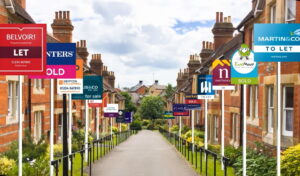
At present many areas of the UK are seeing property that has been listed failing to find a buyer, which in turn has meant asking prices have been reduced. In the more depressed areas where sales volumes have dropped by a third against the same time last year, sales are being agreed but the vendors are taking hits of up to 12%. London and the South are being worst hit at present for many reasons, the prime marketplace is reacting to the exodus of non-doms and highly paid people leaving the country. There is also the COL squeeze that is making just everyone feel less excited about making major purchases, and the mansion tax is already beginning to bite.
We know that any upward tick in the cost of buying a home will damage an already unstable market. Compound this with world events, and the endless stream of bad news, plus a government that may well see itself in a leadership battle in just a few days after the Makerfield By-election, means that the present cloud of uncertainty and gloom looks like it is here to stay for several months yet.